This is just a quick warm-up post for this blog that I had started 4 years ago and have still not written anything for. I’m mainly going to be using this as an outlet to express my opinions on a variety of topics as they come up in my life. The topics are probably going to be revolving around the central idea of professional sports but I’ll be throwing in some thoughts about music and other media here and there.
I thought that this would be a pretty therapeutic outlet for myself given that you can only talk to people about your interests in person for so long until you become the douche who can’t stop talking. I love writing, formally and informally, so hopefully this can help me shake off some of the post-college, post-COVID rust that’s accumulated while working a tedious office job.
Everyone has opinions and they seemingly all want to share them, so I am under no illusion that this will be the start of a fruitful media endeavor nor is that the end goal. This is solely for my own catharsis and if you have an issue with anything I say, feel free to GO FUCK YOURSELF post a well-thought-out reply to the post in question :).
Quinn Ewers is a 2025 draft-eligible Quarterback prospect from the University of Texas.
Ewers began his collegiate career as one of the highest rated Quarterback recruits in recent history, committing to the Ohio State Buckeyes as a senior in high school. To the surprise of many, Ewers would never take a meaningful snap in Columbus before transferring to Texas after his uneventful freshman season. His choice of transfer school in the portal did not come as a surprise however, as Ewers was originally committed to the Longhorns before flipping his choice to the Buckeyes. Upon arriving on campus in Austin, Ewers was viewed as the immediate full-time starter and made true on this perception by becoming Head Coach Steve Sarkisian’s starter for the next three seasons. His time at the school is quite polarizing when trying to grasp a consensus on the signal-caller as an NFL draft prospect. He statistically improved from his first year as a starter, but ultimately seemed to regress in the areas of concern during the 2024 season despite achieving statistical success once again as well as a College Football Playoff berth.
Due to these perceived weaknesses, his draft stock has taken a fairly large hit amongst league circles and draft analysts. At one point in time, he was receiving first round consideration, although possibly due to a lack of options at the time. I chose Ewers for my first fully written prospect evaluation in 2025 due to him having a middle-of-the-road grade from many draft-focused outlets. He isn’t seen to be good enough to break into the first round of the draft but is also deemed as talented enough to not fall into the later rounds of day 3. I wanted to see if the public perception of him as a player was warranted or if there were external factors pushing and pulling his stock every which way in 2024.
Now that the boring stuff is out of the way, let’s talk about what I watched during my evaluation process. This report is based primarily on the two full games of all-22 that I watched while writing my breakdown. These two games were the Michigan game in early 2024 and the CFP game against Clemson from later in the same season. To strengthen my sample, I also quickly ran through some extra games of all-22 from 2023 and 2024. Here are my thoughts on Quinn Ewers:
The Positives
Despite his smaller frame, Ewers does play with an admirable toughness. He would often play through smaller injuries and work his way back onto the field despite an obvious ailment still lingering. This would sometimes prove to be detrimental to the on-field success, but an intangible this apparent cannot be overlooked. Even with a highly-talented backup in Arch Manning, it is clear that Sarkisian trusted Ewers to run his offense as they would always go back to him once he was ready to get back onto the field.
He has active feet which can help him with navigating the pocket and getting into open space to make a play. I did really think highly of his pocket-movement skills and overall footwork when unpressured.
I like his movement skills and general mobility. When a play breaks down, he has the ability to create with his legs whether it be tucking and running or delivering while on the move. I thought that he showed plus improvisational ability when the play allows for it.
He made multiple “wow!” throws while on the move. I think he has a knack for getting a very playable ball to the pass catcher under these circumstances. You will see him square his shoulders and throw with solid upper-body mechanics while moving. His ability to do so allows for a lot of solid completions off of a designed rollout or boot.
Overall, I thought that he showed strong and solid mechanics from top to bottom. His delivery and stance was replicated well. He will alternate between a more standard vertical release on longer-developing throws and a quicker, sidearm release on more short and intermediate attempts.
His sidearm delivery can often produce quick throws through a collapsing pocket that will have me asking, “how did he get that ball out?”
When he is on schedule in the short passing game, the ball gets out very quickly and decisively. This positive particularly shines on comeback routes or when a receiver sits down against zone coverage. He does a good job at giving his receiver inside or outside leverage when necessary on these plays.
Although not a strength of Ewers, he did impress me with a good number of his throws down the field, particularly in the redzone. There were multiple passes to the back of the endzone that were left in a place where only the receiver could have made a play.
The Negatives
Despite his toughness that I highlighted above, his smaller frame combined with a history of injury should raise concerns regarding his ability to be an NFL starting Quarterback.
A good portion of the offense at Texas is based on pre-determined reads and operating on a tight schedule. If that schedule gets disrupted post-snap, it can get very ugly. Ewers was primarily a “one-read and throw” QB at Texas and while that may have been due to offensive scheme design, it does not lend itself well to playing the position at the highest level. It would be one thing entirely if Ewers was better at working off of that primary read if the play is not there, but there are a whole slew of issues caused by the fact that it does not seem as though he CAN do that. An average viewer of his all-22 would be able to tell that he has trouble with staring down his primary read because his eyes do not scan the field quickly and defenders will often be in better positions than you would want due to this predictability.
As mentioned, once you are able to properly diagnose the previous issue, a larger number of problems rear their ugly heads. Ewers will get caught throwing a scheduled pass that was never properly developed post snap, which puts the ball in harms way. He will pigeon hole himself on these plays and force a throw that in theory should be safe but clearly is not. He was almost picked off multiple times in the games that I had watched because he will not let a dead play die.
If the primary read is taken away immediately, you will see Ewers panic and run into pressure or disadvantageous situations because his ability to assess the play post-snap is subpar at best. You will not see him using his eyes to manipulate defenders in coverage on deeper-developing plays because where he is looking once the ball is snapped is often where the ball will go. In the instance where he does work down off of a primary read, he is often at least a tick slow and will leave the ball in a difficult spot for his second option that he is throwing to.
Overall, I think that much of his decision outside of the short and intermediate passing that he is comfortable with leaves much to be desired. I think that he takes too long to throw his deep balls even if they are the primary read. The ball will often times get to a spot that would have been great if thrown on time but because he is often late, the defender in the area will have enough time to position themselves to make a play on the ball. When Sarkisian gives Ewers the keys on a play post-snap, I wanted to see more and just didn’t.
Another large and negative sticking point with Ewers that I couldn’t shake while watching him was that he does not throw with much velocity or zip regardless of the situation. You’ll see a good number of shorter passes that have the proper velocity which might make you think that this criticism is overblown, but then you will see another short pass that is completely and unnecessarily lofted for no apparent reason. By all means, Ewers seems to have good arm talent and I wouldn’t categorize his arm strength as a negative. That raises the question as to why so many of his passes look the way that they do. He will often struggle with ball placement at every level of the field because of the lack of gas on his passes. A short pass will be catchable but also might be higher than you’d like. A lot of his deep balls are feathery and lofted but wont complete their arc in the spot that you would want them too. They will often land well in front of the desired spot.
This also might play into some of his struggles with ball placement on in-breaking routes. He will often put a ball on the receiver’s chest or behind them entirely because he isn’t zipping them in stride.
I think that as a play-by-play passer, his reliance on a pre-set play schedule will often times negatively impact his ability to properly hit a receiver in stride. It feels as though he is throwing what SHOULD be there rather than what actually IS there.
I would be remiss if I did not say that while his ability to move in the pocket is an overall positive, Ewers will often show himself to be oblivious of pressure coming off the edge. He will sometimes be able to escape from this even if he is late to notice, but often times it will be too late and will result in a sack, panicked throw, or an unnecessary QB hit.
Overall Thoughts/Evaluation
I think that I wanted to like Ewers as a prospect more than what I actually came away with. He has a lot of positive traits that are conducive to a positive evaluation as a QB prospect. However, the negative aspects of his play left me with a disappointing impression. The reliance on a pre-determined schedule might be successful in an insulated and well-equipped collegiate offensive system, but that will not translate on a 1:1 basis in the NFL because it never has before. Ewers is talented, but he is not talented enough to be the first QB to succeed by playing how Ewers did in college. He will have to adapt and majorly improve as a post-snap player before I would feel confident in giving him meaningful NFL snaps. There is definitively something interesting to work with regarding Ewers as a development draft prospect and some teams will undoubtedly be ready and willing to bring him in to work on his deficiencies in the off-chance that he becomes an NFL caliber starting Quarterback. However, because his main issues are relatively harder to teach and correct than let’s say a mechanical hiccup, I don’t think that a team should be willing to invest early draft capital to give themselves the opportunity to refine his game. While I was hoping to see Ewers put himself above the middle tiers of QB draft prospects, ultimately he did not.
Draft Grade: 60/100 Draft Value: Early to Mid Day 3
December 10, 2011 – On a cold, dreary afternoon in middle America, the Held family is huddled together in the living room of their suburban home. Our eyes affixed to what is transpiring on the television screen positioned above the fireplace mantle. When you live in Indiana, there isn’t much more to do on a below-freezing evening other than to conform to modern entertainment consumerism and alcohol. The television was our monolith, it was the solution to flyover-state boredom. This wasn’t just any television program, though.
This was special. This meant something. My father’s alma mater, my brother’s soon-to-be school of choice, and my dream school, Indiana University, was playing Kentucky this night. There is something you have to understand about midwestern college basketball at the time; Kentucky may have been hated nationwide for its consistent success, but to every other fanbase in the region they were public enemy #1. The program represented what college basketball purists grew to truly resent about the ever-changing atmosphere of the sport.
The Wildcats built their success on John Calipari’s expert understanding of this very concept. They were the team to beat, but they did it in a way that was foreign to many people. There was no such thing as a 4 year starter for Kentucky anymore. Anthony Davis and Michael Kidd-Gilchrist made sure of that fact. Coach Cal wanted to marry the idea of being an NBA one-and-done talent factory with the ever-present goal of postseason success. They wanted to out-talent everyone in the field. And you know what’s fucked up? It was working. They had built a powerhouse with players who had practically no connections to the state in which they played their home games. Not a single starter for the pre-season darling was from the state of Kentucky. This was the game now, and many had yet to realize it. Soon, we would all be playing the game.
Out of the 17 players listed on IU’s roster that season, only 4 were not from Indiana, Kentucky, Ohio, or Illinois. Every single player on that Indiana team would play multiple seasons for the Hoosiers. To show how antithetical these two programs were to each other, we can take a look at both teams’ top stars.
Kentucky enjoyed the talents of the previously mentioned Davis and Kidd-Gilchrist as well as Indianapolis’ very own Marquis Teague. All three were nearly-consensus ranked top 5 recruits in the entire country regardless of position. All three would leave school after one season to declare for the NBA Draft. This is not to say that Tom Crean was any slouch when it came to recruiting high school players to build his program. Indiana was led in scoring by freshman Cody Zeller, a consensus top-10 recruit and native of Indiana. He would play multiple seasons for the Hoosiers. His partner in leading an Indiana resurgence was sophomore guard, Victor Oladipo. Oladipo was well-recruited but he was not considered a top-100 ranked recruit by most outlets. The young guard would develop into a fierce defender and a reliable scorer for the Hoosiers going into his second season. He, like Zeller, would play multiple seasons for the Hoosiers. Both would develop into NBA-level prospects and both would be selected in the 2013 NBA draft. Juniors Christian Watford and Bloomington-native guard Jordan Hulls were both top 100-200 recruits in their high school class of 2009 and would finish second and third in scoring on the team respectively. They too, would obviously play multiple seasons for the Hoosiers. Indiana did not do one-and-done players. That was not the standard yet.
All of this is said to emphasize the point that many believed that the Hoosiers method of building their team was the correct method. Recruit, develop over multiple seasons, win, and then repeat. Kentucky based their philosophy on skipping that 2nd step, and it pissed people off because it was working. People in the Midwest and around the country wanted Kentucky to fail to uphold the standard of collegiate athletics traditionalism or because they simply wanted to see a top team defeated.
The anticipation for this matchup reached a fever pitch in the direct lead-up to the game. Both teams entered the night with a perfect 8-0 record. Indiana had not beaten any powerhouse teams up to that point, but they were slowly gaining points in the AP rankings. Crean, who had battled through three disappointing season following the dismissal of former head coach Kelvin Sampson, was finally in the driver’s seat of a team who was putting together their best start in years. He trusted his vision and back then, schools like Indiana exercised patience when it came to program-building. For the first time in multiple seasons, it felt like there was a chance. There was a spark that shone as a gleam in the eyes of a downtrodden fanbase. Is Indiana back? Are we really back? If Calipari and Kentucky had it their way, Indiana would serve as simply another stepping stool to reach their ultimate goal of postseason glory. The Wildcats had previously beaten ranked Kansas at Madison Square Garden in convincing fashion early into the 2011-2012 season and were fresh off of a close victory over the pre-season #1 ranked team, North Carolina. These young guys were battled tested and the expectation was that Indiana could only hope to put up a fight and make themselves look competitive in the face of college basketball’s new kings.
As my family sat down that evening, with the vibrant glow of our monolith illuminating the space in which we occupied, the pre-game cynicism of which we were so used to began to set in. My father and many other fans shared the sentiment which was viewed as the most logical outcome. We were going to lose. Our goal should be to make the game close and hopefully continue to raise our stock on a national level. We were just happy that people were paying attention to Indiana again.
But as the game started, that cynicism melted away. Throughout the constant lead changes during the coarse of the game we all began to feel it. It was something that college sports had not made us feel in years. We felt hope. We can fucking do this thing! Each team took multiple score leads at one point during the game, both being erased by the relentless pursuit of glory. The world is watching, we HAVE to win now. The thing is though, not all leads are built the same. Kentucky lost their 6-point lead during the first half and surrendered the lead to the Crean-led squad as the halftime buzzer sounds. Indiana built a strong, sturdy 10 point advantage during the early goings of the second half. That was not to last, though. Kentucky working their way out of that disadvantage felt like a shot through the hearts of Hoosier fans. It felt inevitable. “Well we played them tough, that’s all we could have hoped for!” But the team refused to let any of these feeling define them, they refused to become a pawn in Calipari’s game. The final two minutes of this game would go down in my mind as two of the most intense minutes I have ever experienced as a sports fan. The lead would change three times in these excruciatingly long final moments. If Kentucky was perfect at the free-throw line during this stretch, we would not be having this conversation. Indiana had time to run a full offensive set to close the game with 13 seconds remaining. I can still remember it. Zeller hands the ball off to Oladipo with a mere 9 seconds to spare. Victor executes a seemingly ill-advised half spin inside the paint with three much larger defenders standing in opposition. As if to cruelly tease the thousands of fans in Assembly Hall and the millions watching from the comfort of their homes, Kentucky guard Doron Lamb is able to abscond with the ball after Oladipo loses control momentarily. Luckily, Kentucky is in the bonus and they were able to foul Lamb with 5 seconds remaining. We needed a miracle and that is what was delivered from the basketball gods. Kentucky would not convert both free throws, their lead would only increase to two points.
The ball was inbounded to Verdell Jones who advanced the ball past half-court within the blink of an eye. Everything was riding on this moment. You either settle for being the exciting losers who ALMOST shocked the world, or you manifest a miracle. Jones would be met at the elbow by a Kentucky defender and with no hesitation he would deliver the ball to a waiting Christian Watford. The ball left his hands from three-point distance with a mission. Here is our miracle. Miraculously, the ball did not splash off of the rim, it did not represent a false hope. “The Watshot” was born. The shot was true and no outward force in the universe could hope to contain the pandemonium that ensued. Fans stormed the court, the team was mobbed, and Tom Crean did not look as though he could truly comprehend what had just happened. “Unbelievable! Unbelievable! Do you believe it!” was the call heard around the world. Thanks, Dickie V. The Hoosier state would not settle into its former disposition for days following this. After all, we had just witnessed a miracle.
What if I told you that this miracle was the impetus for the rapid decent of Indiana Basketball into constant mediocrity?
While this shot and win will live in the hearts of the fanbase forever, it would be the closest thing to pure elation that this program would bring to the fervent supporters for the following 12 years. The team would surrender numerous losses to Big 10 opponents following the Kentucky game to finish their season 25-8. We were all riding high going into the tournament. If it wasn’t going to be this year, then what’s stopping us from doing the damn thing next year? Our best players would be returning and Crean would be sure to add more highly talented players to the veteran roster. IU would advance past their first two opponents in the March Madness tournament to reach the Sweet-16. This was a truly heralded accomplishment. If we could just get over this next hump, we could make a run! The thing about miracles is that they typically only happen once in a lifetime. In the cruelest twist of fate imaginable, Indiana would be pitted against a determined and angry Kentucky team who had only lost one more game following the improbable loss in December to finish their season at the top of every poll and as a strong 1-seed. They were one of the greatest collegiate teams of all time, but we had beaten them once. We can do it again, right? Yeah, so it turns out that following their loss to Indiana, Kentucky actually got better. The Hoosiers would not be smiled upon for a second time. It was over and at the hands of the team in which IU had found their confidence and optimism.
At this point, spirits were still high. Crean would continue to add phenomenal talents through the recruiting trail and Indiana would finish atop of the Big 10 in their next season. Unfortunately what we did not know at the time was the Tom Crean could not get his uber-talented teams past the Sweet-16. He was not the coach that John Calipari was. Following another 3rd round tournament loss for the Cream and Crimson, a pattern would begin to take shape. Crean would recruit well, but never land the top guy, build his team, and then settle into mediocrity. He continued to look for big fishes in the recruiting pond all the while the team was floundering. One more resurgent year in 2015 paired with yet ANOTHER 3rd round tourney loss signaled the end of the Tom Crean era. He would remain for one more season following this with little to no success. Everyone could see the writing on the wall. We just lost again with quite possibly the most talented IU team in over a decade. That season IU rostered 5 eventual NBA players and could still not beat Syracuse. If it didn’t work at that point, it was probably never going to work.
So Crean is out, who’s in?
I knew the Archie Miller hiring wouldn’t work out fairly early on into his tenure as head basketball coach of the Indiana Hoosiers. For full transparency, Miller’s first season as Indiana’s head coach took place alongside my first year as a student in Bloomington. Miller came over by way of the Dayton Flyers where he found breakout postseason success in his first few years as the head man. I mean hey, he made an Elite-8! We’re WE making Elite-8s? Didn’t think so. When the hire was made, I felt some skepticism regarding his chances of success seeing as how it had been three full seasons since Dayton had any notable postseason run. But hey, I was told that he’s a program builder and that him making the postseason with Dayton in the first place shows that, as a coach, he’s leagues ahead of Crean who seemingly squandered the plentiful talent he brought in every season. I almost bought in. I was almost excited about the prospect of a highly touted, program-building coach coming in and rebuilding the team alongside my years as a student. Sure, it might take the first year or two to get our footing on solid ground, but once the foundation is set my final two years in Bloomington are going to be filled with success and a winning atmosphere. I love IU sports and sprung on the opportunity to purchase student season tickets for basketball and football. My roommate and I were about to make the famed pilgrimage from our dorm room to Simon Skjodt Assembly Hall to bask in the religious experience of our first IU home game as students on campus. The brisk November air could not deter us from making the 30 minute trek. Us two did not have sky-high expectations for the program this year, we’re rebuilding after all. However, it was going to be so fun to take in the post-win aura of the stadium following a layup home opener tune-up game against lowly Indiana State.
Final Score: ISU 90 at Indiana 69
Fuck this. You would have thought that the Hick from French Lick himself was suiting up of the Sycamores with the way in which we were completely outclassed by little brother. I did not and still do not care what anyone has to say about a supposed rebuild and giving a coach time, you DO NOT lose to Indiana State by 21 at your HOME OPENER. It took Archie one game to trigger my cynicism and apathy towards the program. It only took him 12 to lose me completely.
I was having an early Christmas with my family at my grandparents’ home in Anderson, Indiana. My Aunt, Uncle, and Cousins come in from out of state so it would be hard to coordinate Christmas day itself between everyone. We had been meeting the week before for early Christmas as a yearly tradition. If there is one thing you have to know about the late Norm Held as it pertains to this story; the man loved college basketball. His television itinerary consisted solely of old westerns, Cubs games, and any college hoops he could get on the screen. My grandpa, affectionately referred to amongst the whole family as “Papa,” was a coach himself before retiring. He was a damn good one too. I still remember attending his induction into the Indiana Basketball Hall of Fame. He was so happy that night and it was just a really special thing to be able to witness and revel in. I bring all of this up to ultimately say that because two of his grandsons were attending Indiana, with his son having attended as well, we were tuned in the December 18 game between Indiana and little-known Indiana-Purdue Fort Wayne. Papa was a Bob Knight fan, as many Hoosiers there to witness our former glory were, so he still kept up with the program regardless of his family attending the college. He always admired good coaching and the traditional aspects of college basketball. He loved when teams played “the right way.” Needless to say, Papa and all of us watching were in utter disbelief as the final buzzer rang with the final score showing IPFW 92 vs Indiana 72. We just lost by 20 at home to a school that no longer exists in 2024. There was no “right way” with Archie Miller, we just sucked. I was out. Until Archie Miller was gone, I would not be engaging with the team in any meaningful way.
Little did I know at the time, I would never experience an IU basketball game as a student without Archie Miller as the head coach. It took the athletic department in Bloomington four years of not making the March Madness tournament for them to realize that Archie might not be the guy. It took me 12 games.
My big issue between Crean and Miller was that we could never find what I thought should be the perfect marriage between roster building and coaching. With Crean, he could get the players to come to Indiana, but he couldn’t outcoach his high-level contemporaries. He began to covet the highly-touted, non-local guys who all had sights on playing at the highest level. I think Crean wanted to be a Calipari or a Pitino but the main difference is that the latter two could actually coach at a high level. With Miller, he was supposed to be coming with the post-season success. He was supposed to bring in program players and create sustainable success while also displaying a keen understanding of the X’s and O’s that Crean seemingly lacked. He tried at the former and simply failed with the latter. Archie was able to snag a few highly-coveted players out of high school to go alongside what his idea of program players were, but the cohesion was not there. I think that 10 years ago, his ideas worked and worked well on the smaller stage of Dayton where the lights weren’t too bright. But this is Indiana. You’re paid to win and nothing that he did amounted to meaningful wins.
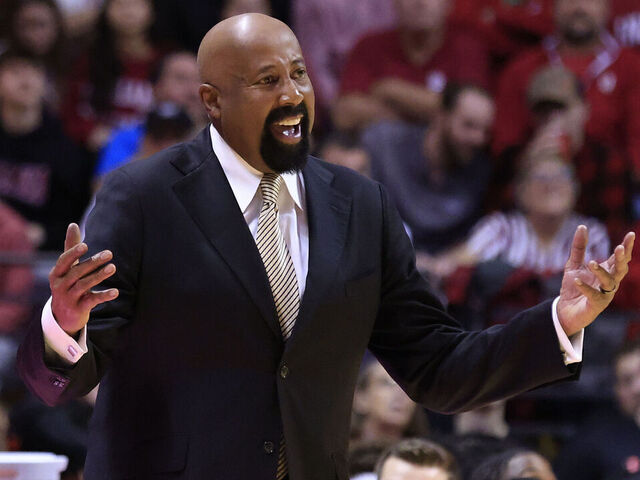
This brings us to Mike Woodson.
I was scared that Indiana would revert back to the safe space that it knows all-to-well. I was scared that they were going to settle for an alumni hire. I am fine with looking for talent from within the state, but far too many alumni hires make that their modus operandi. Indiana produces some great talent, I love the idea of recruiting our program players and glue guys from within the state seeing as how the modern landscape of NIL and the transfer portal has incentivized player mobility. If a guy loves the state and the program, you have a better chance of keeping him in-house for multiple years. But I wanted someone fresh, with a new perspective. Someone who has a proven method of building and coaching. I wanted Shaka Smart. The former Texas Longhorns coach had just been let go after failing to capture postseason success in his multiple years as the man in charge. That may not sound like a recipe for success at Indiana, but if you paid attention, you could see it. You could see that he was actually a fantastic coach being employed by a school who diverted more resources into football than into basketball. This is the polar opposite of us. Smart ended up taking the Marquette job and has not looked back since, just recently securing a 2-seed in the 2024 March Madness tournament and finishing in the top-10 of the final AP poll in both of the last 2 seasons. We, on the other hand, did exactly what I was afraid of us doing. We hired Mike Woodson.
Woodson, to me, was an uninspired hire that would not move the needle for the young players who want to showcase their talents on the biggest stage. To Woodson’s credit, he did not limit himself to recruiting from within the state, but his recruiting focus seemed skewed. This is where we wrap up by going on a full-on rant. The fact is the Calipari method is dying out. I harped on it so much in the first section of this piece because that’s how it was back then. Even though Duke and Kentucky were not perennial champions, it felt as though they were always in the mix with their high-end talent. Now, the teams who are winning are typically older rosters. They rely on coaching and experience to outlast the younger, flashier teams. For a winning team, the NBA level talent has either been there for multiple years or is coached to fit in their assigned role. It’s a healthy mix of outside shooting at a high clip, and skilled bigs who can lock down the interior. For Woodson, it seemed as though he consistently wanted to build through a solo star, or maybe two. He wanted the big fish. There are probably hundreds of great high school ball-handlers and shooters in the state of Indiana alone thanks to the evolution of the modern style of basketball. Woodson did not seem interested in adding these players unless they had a star count of 4 or higher. Throughout his time at Indiana, he leaned too heavily on the play of his star big Trayce Jackson-Davis. His guards never developed in a way that would have been conducive to postseason success. And yet, he still loves to recruit big guys who can’t shoot. His uninspired ways led to Indiana just recently losing out on one of their highest rated recruits ever. This year was a miserable slog. They couldn’t outshoot anybody and it completely eliminated a dynamic to their game that any successful program would have addressed. It should not be hard to recruit shooters. That is all that many kids want to do nowadays when they suit up to play. IU actually has some very talented players from this last roster, you just wouldn’t be able to tell by how one-note they played. What I was scared of happening, happened.
Since the “Watshot,” nothing has really come close to matching that level of excitement and aura surrounding the team. I can’t simply put it all on the coaches. You have to blame the board and the athletic department for either playing it too safe or not doing enough research before making the hires. You should not have to pluck small school guys who overachieve or former players or alumni. The best coaches in the country should WANT to coach for IU. The program is just not at that level anymore and the fault is shared but it isn’t a mystery. The fact that Woodson will most likely be keeping his job after this past season signals that this athletic department is too risk-averse and that they are willing to cave to other alumni who are buddy-buddy with Woodson. You cannot win without a great coach. We do not have a great coach. Simple as that. The current trajectory for IU Basketball is a straight shot to constant apathy, a lack of caring from the fanbase.
Well now that I’ve declared that the Calipari method is no longer feasible, at least we can revel in the fact that IU and Kentucky are both bottom dwellers now. Right?
Damnit.
When IU Football has a brighter outlook than you, you’re in a very VERY dark place.
 Heldy's House